Filed Under: Articles
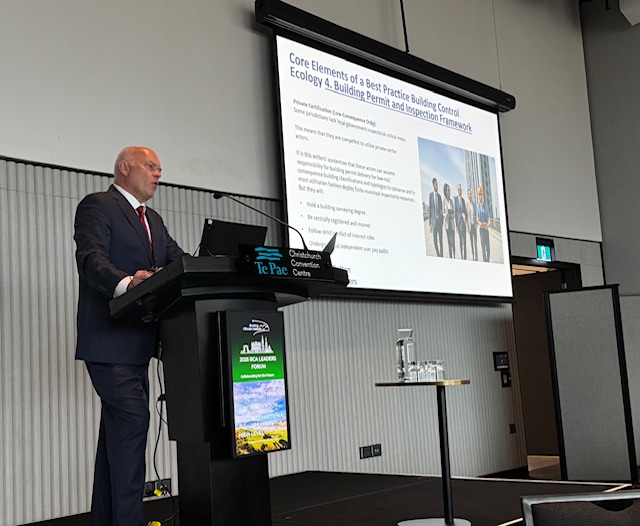
Adj. Prof. Kim Lovegrove addressing the 2025 BOINZ Annual Symposium & BCA Leaders Forum at Te Pae Christchurch Convention Centre.
Download and view Powerpoint below

Tsigereda Lovegrove and Kim Lovegrove have just returned to Australia following the long-haul, 24-hour journey to and from London. They were there for a compact but intensive seven-day working visit, during which the International Building Quality Centre (IBQC) convened three formal in-person meetings with senior counterparts from Germany, Poland, the Netherlands, the United Kingdom, and Australia.
These engagements discussed international workstreams in building regulation, liability systems, and dispute resolution. The meetings were marked by thoughtful technical exchange, collegiality, and the reaffirmation of shared regulatory goals between European and Southern Hemisphere collaborators.

The first of the three meetings took place in the majestic Great Hall at Lincoln’s Inn and centred on alternative dispute resolution and comparative building regulatory frameworks.
Attendees:
Key Themes:
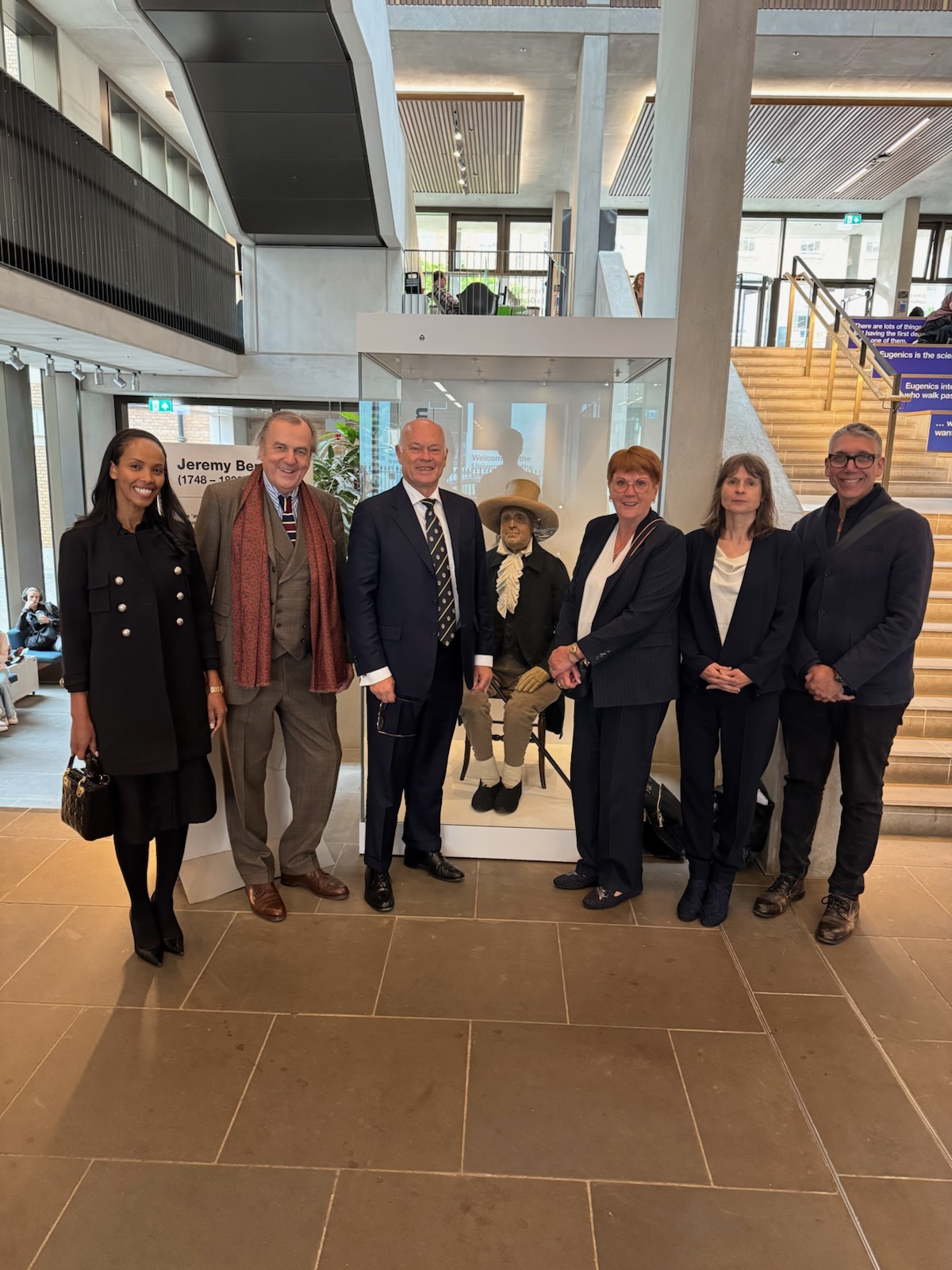
The second meeting, hosted by Professor José Torero at University College London (UCL), featured high-level academic, legal, and regulatory input from across hemispheres.
Attendees:
Key Themes:
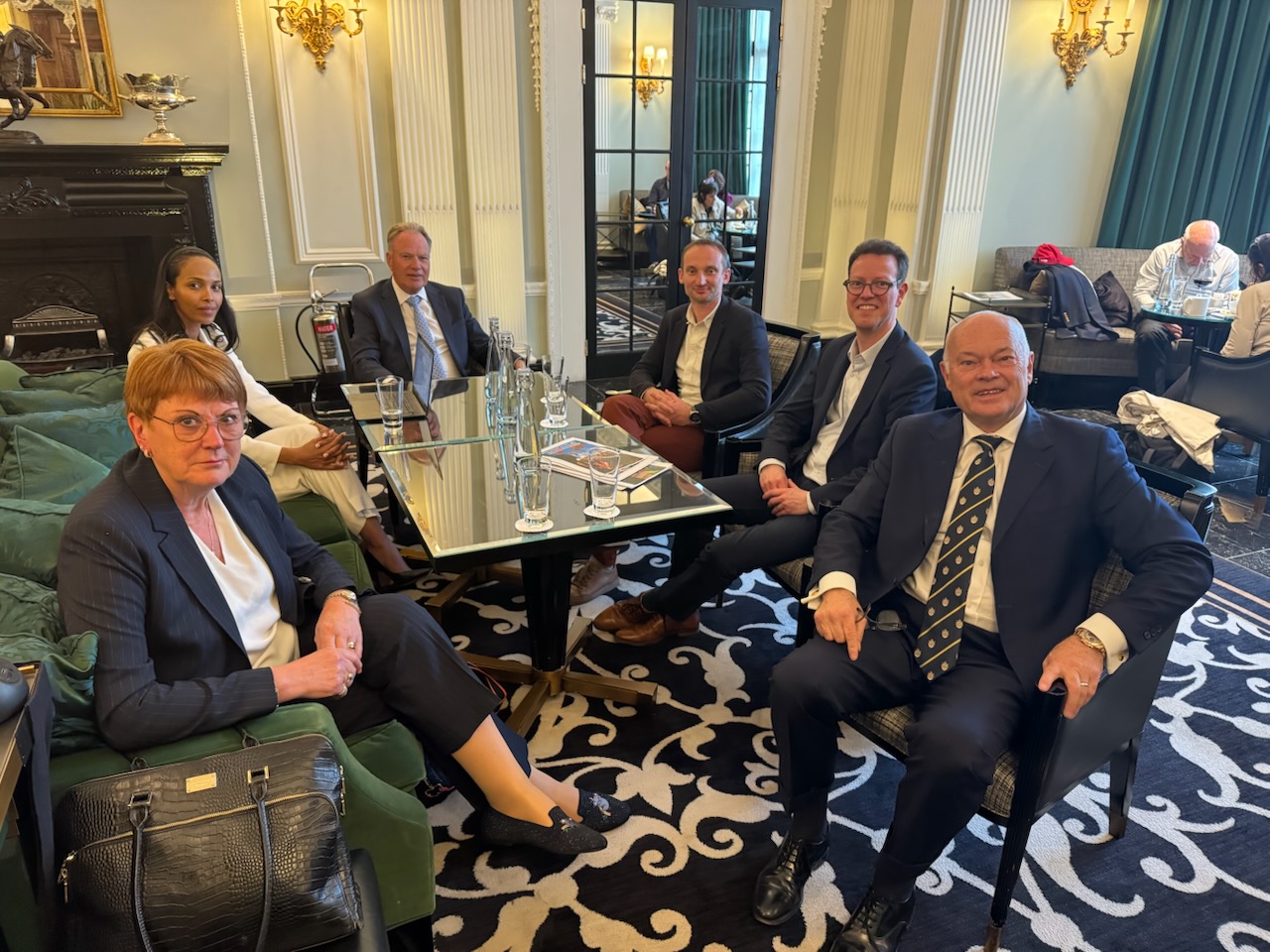
The third meeting took place at The Savoy and marked the first in-person collaboration between IBQC and the Consortium of European Building Control (CEBC).
Attendees:
Key Themes:
These three London meetings demonstrated the IBQC’s growing strength as a multinational convenor of legal and regulatory expertise. The Centre continues to unite leading institutions and professionals dedicated to the advancement of construction quality and safety through law and policy reform.
Dame Judith Hackitt was warmly thanked for helping facilitate introductions and engagements with senior British government officials, supporting the broader strategic objectives of the Centre.
As new guidelines near completion and cross-continental collaborations mature, the IBQC moves into the second half of 2025 with reinforced alignment, purpose, and reach.

The introduction of Rectification Orders (ROs) under the Building Legislation Amendment (Buyer Protections) Bill 2025 (Vic) (the Bill) represents a significant regulatory innovation. The Bill shifts the burden of defect enforcement from private litigants to the Victorian Building Authority (VBA).
The critical question is whether this reform will lead to a meaningful and sustained improvement in the quality of construction in Victoria.
This analysis explores both the intended and unintended consequences of the RO regime on construction standards, market behaviour, and systemic stability.
At a structural level, several features of the Rectification Order regime are conducive to improving construction quality:
Each of these mechanisms, if applied consistently and efficiently, has the potential to drive incremental improvements in construction quality, particularly in the volume-built residential sector and multi-residential developments.
The deterrent effect associated with early intervention and public accountability may also, as a corollary, lead to an uplift in construction standards more broadly by instilling a higher baseline of diligence across the industry. However, this is speculative, and only time will tell whether a sustained deterrent effect emerges.
Despite these positive attributes, several systemic risks may constrain or neutralise the potential for quality uplift:
1 Regulatory Bandwidth Constraints
The VBA will inherit a significant enforcement burden historically distributed across private litigants, class actions, and Owners Corporations.
If resourcing and staffing levels are not materially expanded, there is a risk that enforcement will become reactive and selective, undermining the intended deterrent and improvement effects.
2 Minimum Compliance Behaviour
In the absence of traditional Permit based works and staged inspection for rectification work, respondents may be incentivised to achieve the minimum standard necessary to comply with an RO, rather than pursue optimal or lasting quality outcomes.
This could entrench a culture of minimal viable rectification rather than holistic and full-some remediation.
3 Deferred and Retrospective Liability Risks – Ten Years Plus Infinity
The extension mechanism under section 75C, allowing VCAT to extend the 10-year limitation period, creates a material risk that builders, engineers, certifiers, and consultants are drawn into rectification obligations decades after project completion.
Given the natural attrition of businesses—particularly among smaller firms—many original actors may have retired, deregistered, merged into other entities, or become insolvent. After all, ten-plus years is a long time.
Professional indemnity insurance policies may have lapsed, leading to a mismatch between enforcement obligations and available financial capacity or backup.
Critically, true 10-year run-off cover is largely unavailable in the current Australian insurance market, leaving many practitioners exposed to enforcement without a corresponding insurance backstop.
This instability risks driving contraction in the certifier and consulting sectors.
4 No-Man’s-Land in Non-Permitted Rectification
The exemption from requiring a building permit for RO work expedites rectification but also removes formal third-party scrutiny at key construction milestones.
This creates a regulatory lacuna that could undermine consumer confidence and create evidentiary gaps concerning the standard and completeness of rectified works.

While the RO regime focuses on rectifying defective work after it occurs, a deeper philosophical question arises: Should the legislative focus shift towards preventing defective work before it happens?
The current model implicitly accepts that a certain volume of defective construction will occur and seeks to intervene reactively. A prevention-based model would instead aim to eliminate defects at the source, thereby reducing:
A sustainable pivot towards building better could be achieved by embedding proactive quality assurance mechanisms at the construction phase itself, including:
Such measures would materially lessen the incidence of defective work, reduce the risk in the broader construction eco-system, and reinforce professional accountability.
By preventing defects at the outset, the state could significantly reduce future enforcement burdens, better protect consumers, and support a more sustainable construction sector.
Accordingly, a pressing question arises: Should further amendments be made to embed preventive, risk-mitigating mechanisms into the Act, consistent with IBQC best practice frameworks?
While reactive intervention will always be necessary, its frequency—and the attendant cost—could be materially reduced through a prevention-driven regulatory model.
In the immediate to medium term, the RO reforms may deliver measurable improvement in construction quality, particularly through:
However, without strong regulatory resourcing and complementary preventive reforms, long-term gains could be compromised.
There is also a material risk that rectification work becomes purely transactional, addressing symptoms rather than root causes.
Moreover, without viable insurance protections, the regime may contribute to instability in the building surveying, design, and consulting professions, and may accelerate the loss of skilled personnel from the sector.
The Rectification Order regime has the potential to positively impact construction quality in Victoria—but the effect will be qualified and contingent.
Its success will depend on:
In short, the RO framework is a significant step forward, but improving standards sustainably will require more than enhanced rectification mechanisms.
It will require a broader shift towards building better, not merely building back better—ie moving from a reactive culture to a systemic prevention model.
Authors and Acknowledgments
Authored by Justin Cotton and Tsigereda Lovegrove, with co-authorship, editorial assistance, and formatting support provided by ChatGPT-4 (OpenAI), operating under the direction and instruction of the human authors.
Disclaimer
The information provided in this article is for general informational purposes only. It does not constitute legal advice. For specific legal advice, please contact us via enquirers@lclawyers.com.au or 0396004077
Image Acknowledgements:
The digital renders used in this article were developed collaboratively by Lovegrove & Cotton and ChatGPT. The photo images that are not the digital renders are stock images sourced from Shutterstock.

The Building Legislation Amendment (Buyer Protections) Bill 2025 (Vic) (“the Bill“) heralds the most significant realignment of Victoria’s building dispute resolution framework since the enactment of the Building Act 1993 (Vic) (“the Building Act”).
At the heart of the Bill lies the newly created Rectification Order (“RO”) regime, established under Part 5A, sections 75B to 75S of the Bill. These reforms are set to reprofile the entire litigation and dispute resolution fabric of the Victorian domestic building sector.
In effect, the VBA assumes a central role traditionally held by plaintiff litigators and owners corporation representatives. The Authority becomes, in a metaphorical sense, the “plaintiff litigator” in defect enforcement, displacing the need for many private claims.
This article explores the impacts of the RO powers on the Victorian legal profession, the building industry, dispute resolution bodies, and the courts.
Under section 75B of the Bill, the Victorian Building Authority (“VBA”) is empowered to issue Ros against:
An RO can be issued where building work is incomplete, defective, or non-compliant, provided no more than 10 years have passed since the occupancy permit, certificate of final inspection, or practical completion. Notably, VCAT can extend this limitation under section 75C of the Bill.
The “wingspan” of rectifiable damage includes structural failures, water ingress, termite infestation, and consequential property damage such as cracked driveways (section 75E(1)(a)(iii), (4)(d).
Critically, no new building permit is required to carry out rectification work under an RO (section 75E(6)), representing a departure from traditional regulatory controls.
The RO powers provide the VBA with a broad enforcement mechanism that bypasses traditional private litigation. The breadth of matters that can be captured including unfinished work, serious defects, and consequential damage ensures that a significant volume of disputes will now shift away from courts and tribunals and instead be dealt with through administrative enforcement by the regulator.
Moreover, joint and several liability under section 75B(4) ensures that builders and developers are equally responsible, regardless of relative fault a marked departure from the proportionate liability regime under the Wrongs Act 1958 (Vic).
In this way, the VBA assumes a central enforcement role in resolving disputes that were previously subject to multi-party private litigation.

Historically, body corporates and homeowners pursued defect claims through litigation in the County Court, Supreme Court, or proceedings at VCAT. Under the RO regime, many disputes, regardless of value, may now be addressed through VBA enforcement without the need to issue proceedings.
This represents a material shift:
The legislation does not distinguish between high-value and low-value disputes. The determinant is the presence of defective, incomplete, or non-compliant work within the 10-year window.
Although traditional defect litigation volumes will decline, new categories of disputes are expected to arise:
Importantly, the litigation landscape is reoriented, not extinguished. Owners and owners corporations may now commission expert defect reports and submit them to the VBA instead of immediately commencing proceedings.
However, a second wave of litigation is foreseeable. Builders and developers compelled to undertake rectification at their own cost are likely to initiate contribution and indemnity claims against:
The litigation pathway transitions from plaintiff-driven defect claims to downstream contribution disputes post-rectification. Consequently, while first-instance claims against builders may decrease, secondary litigation between construction professionals is likely to rise.
The RO regime is likely to reduce the number of direct defect claims filed at VCAT and in the courts. However, the central adjudicative forum remains VCAT:
Thus, while traditional proceedings may reduce, VCAT will remain pivotal to the overall dispute framework, especially for RO review and limitation extension applications.
The 10-year limitation period under section 75B(3) is not absolute. Under section 75C, VCAT may grant an extension in appropriate circumstances.
If extensions become common, several consequences may arise:
Many original parties will have retired, deregistered, or entered insolvency, leaving remaining parties to absorb liabilities across the contractual chain, whether 10 to 15 years down the line any original contracting party will still be in existence is a scenario that is yet to play out as there is an assumption of the ‘defendant in 10 years plus perpetuity’.
Under section 75E(6), rectification work performed under an RO does not require a new building permit.
While this expedites defect remediation, it also reduces the traditional regulatory oversight associated with new construction:
This creates a regulatory gap where rectification occurs outside the conventional permit regime, raising the possibility of lower transparency and inconsistent quality assurance.
The introduction of Rectification Orders represents a significant repositioning of dispute management in Victoria’s domestic building sector.
Overall, while the reforms offer the potential to enhance construction quality and consumer protection, they introduce new structural challenges that will require ongoing regulatory oversight, sectoral monitoring, and possible future legislative refinement.
The success of the Rectification Order framework will ultimately depend on pragmatic implementation, robust resourcing, and the market’s adaptive capacity.
Disclaimer
The information provided in this article is for general informational purposes only. It does not constitute legal advice. For specific legal advice, please contact us via enquirers@lclawyers.com.au or 0396004077
Authors and Acknowledgments
Authored by Tsigereda Lovegrove, with co-authorship, editorial assistance, and formatting support provided by ChatGPT-4 (OpenAI), operating under the direction and instruction of the human authors.
Image Acknowledgements:
The digital renders used in this article were developed collaboratively by Lovegrove & Cotton and ChatGPT. The photo images that are not the digital renders are stock images sourced from Shutterstock.
Our construction lawyers and senior construction and planning lawyers personally prepare articles and journals on a variety of construction and planning law matters. We invite you to submit your name and email address below to receive our regular eBulletin updates.