
Under Victorian law, the passage of special resolutions by an Owners Corporation is governed by Section 96 of the Owners Corporations Act 2006 (Vic) (“the Act”). Special resolutions are required for significant decisions, such as initiating legal proceedings for building defects and strict thresholds must be met. However, where a resolution falls short of the special resolution threshold but still secures majority support, it may become an ‘interim special resolution’, with the potential to become a special resolution under certain conditions.
This article discusses how and when an interim special resolution becomes a special resolution in Victoria and outlines the legal and procedural steps that must be followed.
What Is a Special Resolution?
A special resolution of an Owners Corporation is defined in section 96 of the Act as a resolution passed by:
“75% of the total lot entitlements of all the lots affected by the owners corporation (if a ballot or poll is taken).”
This means that, whether via a meeting or written ballot, the resolution must be supported by lot owners holding at least 75% of the total lot entitlements. It is not measured by the number of lot owners but by the aggregate lot entitlement they hold.
What If a Resolution Gains Majority Support, but Not 75%?

Where the resolution receives more than 50% but less than 75% support (by total lot entitlement), it may be deemed an interim special resolution, provided the opposing vote does not exceed a certain threshold.
An interim special resolution occurs only if:
- At least 50% of the total votes (by lot entitlement) are in favour; and
- No more than 25% of the total votes (by lot entitlement) are against the resolution.
In effect, if support falls between 50% and 74.99% and formal objection is minimal (25% or less), the resolution is classified as interim and enters a 29-day provisional period.
When Does an Interim Special Resolution be Taken to be a Special Resolution?
Pursuant to section 97(5) of the Act:
“An interim special resolution becomes a special resolution of the owners corporation on the day that is 29 days after the day the interim special resolution was passed unless lot owners who hold more than 25% of the total votes for all the lots affected by the owners corporation petition the secretary against the resolution.”
Thus, an interim special resolution automatically develops into a special resolution after 29 days, unless aborted by a qualifying petition.
To summarise, the interim resolution becomes fully effective unless:
- A written petition is submitted to the secretary within 29 days, and
- The petitioning lot owners together hold more than 25% of the total lot entitlements.
What Are the Notification Requirements?
The Act also requires the secretary (or the Owners Corporation manager acting in that capacity) to notify all lot owners of the outcome of an interim special resolution within 14 days of the close of the ballot or meeting, in accordance with section 97(2) and (3) of the Act.
Failure to comply with this requirement may cause confusion or even undermine the enforceability of the resolution.
Ensuring timely notice enables affected owners to consider whether they wish to petition against the interim resolution.
Building Defect Litigation and Special Resolutions
Many Owners Corporations in Victoria face the prospect of defective common property, particularly in the context of the 10-year statutory warranty period under the Building Act 1993 (Vic). Where defects are identified and litigation is contemplated, it is common practice to seek a special resolution that authorises:
- Pursuing claims against builders or developers;
- Including other potentially liable parties such as designers, engineers, or certifiers; and
- Delegating authority to the Owners Corporation Committee and its legal representatives to conduct the proceedings.
If the vote to pass such a resolution falls short of 75% but satisfies the conditions for an interim special resolution, the Owners Corporation must follow the statutory steps to allow the interim special resolution to become a special resolution.
What Happens if the Resolution Fails?
If the motion receives less than 50% support, or more than 25% of votes are against, then neither a special nor interim special resolution has passed. In that case:
- The Owners Corporation must still comply with its legal duties under section 46 of the Act, which imposes a strict obligation to repair and maintain the common property.
- Even without a formal resolution, the Owners Corporation may be liable if defects cause further damage or loss to common property or private property (individual lots).
Where there is no resolution to initiate legal proceedings, alternative action, such as urgent repairs or further expert engagement may be necessary to mitigate loss and discharge legal duties.
Key Takeaways
- A special resolution requires 75% of the total lot entitlements to vote in favour.
- A majority vote (over 50%) with minimal objection (under 25%) can result in an interim special resolution.
- If no objection is lodged by owners holding more than 25% of the lot entitlements within 29 days, the interim resolution becomes a special resolution by operation of law.
- The secretary must notify all owners within 14 days of the passing of the interim special resolution.
- Even where a special resolution fails, the Owners Corporation remains under a strict legal duty to maintain and repair common property.
By Tsigereda (Ziggy) Lovegrove
Lawyer and Practice Manager, Lovegrove & Cotton Lawyers Pty Ltd
Disclaimer
This article is for general informational purposes only and does not constitute legal advice. For advice specific to Owners Corporations, building defects, or dispute resolution, please contact Lovegrove & Cotton at enquiries@lclawyers.com.au or call (03) 9600 4077.
Image Acknowledgements:
The digital renders used in this article were developed collaboratively by Lovegrove & Cotton and ChatGPT. The photo images that are not the digital renders are stock images sourced from Shutterstock.
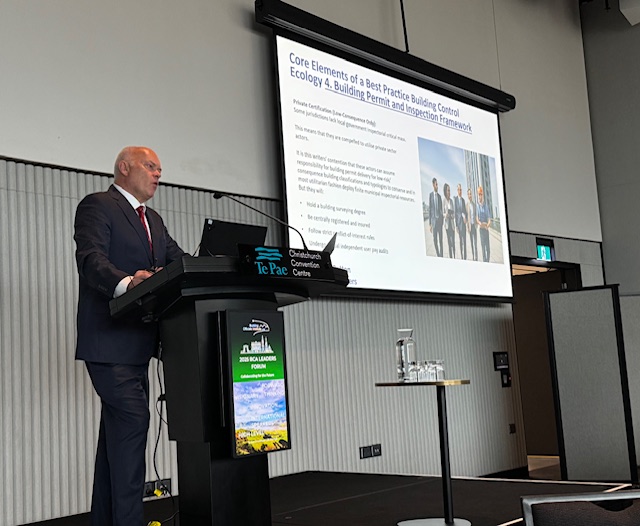
Adj. Prof. Kim Lovegrove addressing the 2025 BOINZ Annual Symposium & BCA Leaders Forum at Te Pae Christchurch Convention Centre.
Download and view Powerpoint below

The World Organization of Building Officials (WOBO) has acknowledged the work of Lovegrove & Cotton for their recent contributions to the International Building Quality Centre (IBQC). WOBO noted the firm’s involvement (in a WOBO update dated 28 March 2024) regarding IBQC guidelines, stating, “WOBO appreciates the work carried out by Lovegrove and Cotton and their recent updates in respect of IBQC.”
Members of the Lovegrove & Cotton team have been instrumental in assisting with the development of the IBQC Risk-Based Building Classification and Mandatory Inspection Guidelines. These guidelines were developed over 18 months, involving collaboration with leading professionals from the United States, United Kingdom, Australia, New Zealand, and Germany. The guidelines focus on implementing a risk-based approach to building classification and mandatory inspection processes.
On 28 March 2024, three key articles authored by Lovegrove & Cotton were republished by WOBO:
- IBQC Risk-Based Building Classification and Mandatory Inspection Guidelines – Details the collaborative effort in developing these guidelines.
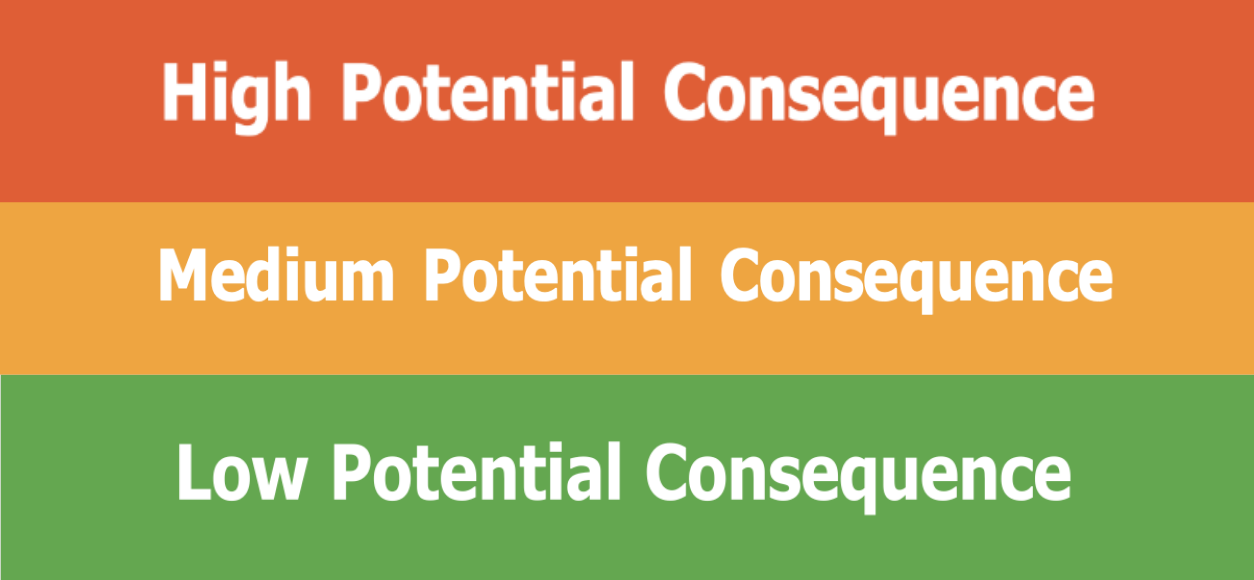
- The New IBQC Risk-Weighted Building Classification and Mandatory Inspection Guidelines – So Compellingly Logical – Discusses the rationale behind a risk-based approach to building codes.

- 15 Core Elements of Best-Practice Building Regulation Highlights the essential components that contribute to effective building regulations.

Lovegrove & Cotton acknowledges WOBO’s recognition and is very grateful. The firm also recognizes the important role that this highly regarded global body plays in advancing good practice approaches to building regulation and building control.
Lovegrove & Cotton will continue to support the development of robust building regulatory frameworks, in line with a tradition of helping to establish good practices in building control dating back more than 30 years.
Image Acknowledgements:
The digital renders used in this article were developed collaboratively by Lovegrove & Cotton and ChatGPT. The photo images that are not the digital renders are stock images sourced from Shutterstock.

A Profile on Tsigereda Lovegrove From Ethiopia to Australia, from Amharic to English and from Admin to running a legal practice – the journey to date and continuing
Tsigereda left Ethiopia in 2009. After an initial period of 4 months in Auckland, New Zealand, with her late mother-in-law, Tsigereda Lovegrove settled in Australia. She learned English as her second language and set her sights on a career in law.
Building a Career at Lovegrove & Cotton
Starting as a receptionist at Lovegrove & Cotton Lawyers in 2011, Tsigereda worked her way up within Lovegrove & Cotton, which was established in 1993 by the writer.
Balancing Education and Professional Responsibilities
While working at the firm, Tsigereda embarked on an LLB at Victoria University. She balanced her studies with her role as Office Manager and Financial Controller, overseeing the firm’s financial and administrative operations. This experience laid a solid foundation for her future roles.
Transitioning to Legal Practice
After completing her law degree, Tsigereda became a Construction Lawyer and Practice Manager at Lovegrove & Cotton. With 11 years of management experience, she now oversees practice management, ensuring the firm’s operations run efficiently while fostering a positive work environment. Since she became Practice Manager, the firm has grown by 300% in terms of full-time legal personnel.
Legal Expertise in Construction Law
Tsigereda’s legal practice covers a broad spectrum of construction law, including tribunal and court cases, building appeals, and building regulatory compliance in Victoria and NSW. She also provides advice on legislative interpretation of the Building Act 1993 and the Domestic Building Contracts Act.
Recognition of her expertise is reflected in the law firm being named in the construction section of Globe Law Experts 2024 for Australia.
International and Local Contributions
In addition to her domestic legal work, Tsigereda serves as Secretary to the International Building Quality Centre (IBQC) Dispute Resolution Coalition. She coordinates efforts among a distinguished group of international legal experts, including senior jurists from Africa and Australia, as well as eminent construction lawyers from both hemispheres. In this capacity, she contributes to the development of dispute resolution protocols and building regulatory guidelines for emerging economies. She is also a member of the Victorian Building Disputes Practitioners Society Committee.
Her commitment to Africa in terms of the work she does on emerging economy guidelines is an intergenerational commitment to capacity development in Africa, as her grandfather-in-law worked for UNESCO in the 1950s and 60s in Addis in educational capacity building. The late Norman Lovegrove was instrumental in helping to establish mobile schooling where UN VW Combis transported teachers to the rural regions to make education more accessible.

Publications and Thought Leadership
Tsigereda has authored and co-authored several publications, focusing on key issues such as building insurance requirements, risk-based building classification, and inspection protocols for emerging economies.
Some Thoughts on Tsigereda Lovegrove’s Contributions
“In the short time I have known Tsigereda ‘Ziggy’ Lovegrove, I have come to respect her diligence, capabilities, and tenacity. Set against the backdrop of a faraway homeland, Ziggy forged a new life for herself in Australia, conquered the English language, and raised a family. In her professional life, Ziggy is rightfully proud to have attained a law degree and become a protégé of the law firm that bears her husband’s name. Professionally, she has assisted the International Building Quality Centre in conducting background research, synthesizing material, and coordinating some of the logistics of international meetings, which has demonstrated her dexterity in familiarizing herself with topics that one can only imagine were quite foreign to her not so long ago.”
– Neil Savery, IBQC Board Member
“ In my interactions with Tsigereda, I have found her to be a remarkable force of intelligence, integrity, and professionalism. At the IBQC, she skillfully facilitated teamwork, ensuring that collaboration was smooth, insightful, and effective. Her exceptional communication and leadership skills were evident in these interactions.
Her extensive knowledge and research contributions on mediation as a dispute resolution mechanism have made a significant positive impact on the industry. Additionally, her strategic thinking and dedication to enhancing dispute resolution mechanisms in developing countries, such as Ethiopia, have left a lasting impression on me”.
– Judge/Justice Maedot Yeshak Tesfaye, Federal Court of Ethiopia .
The Future

Tsigereda is intent on growing the practice in Australasia, opening a New Zealand office, and continuing to participate in the development of building regulatory guidelines that are contextualized for Africa. Her commitment to advancing the industry reflects her dedication to making a positive difference both locally and globally.
This piece is penned by the founder of Lovegrove & Cotton Kim Lovegrove
- 1
- 2
- 3
- …
- 8
- Next Page »